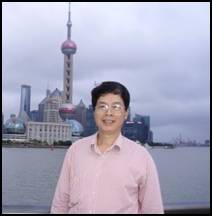
余聶芳,教授,博士生導師。1999年博士畢業(yè)于法國里爾巴斯德研究院和里爾第二大學藥學院(Faculté dePharmacy, Université de Lille II),獲博士學位。其后,先后在美國Thomas Jefferson大學(1999-2000),田納西大學Memphis分校和St Jude兒童醫(yī)院(2000-2001)從事博士后研究工作。2002年3月加入美國Chiron公司和新加坡經(jīng)濟戰(zhàn)略發(fā)展局(EDB)聯(lián)合組建的藥物研究與開發(fā)公司-S*BIO PTE LTD。2006年5月辭職回國,任中南大學藥學院分子設計與藥物發(fā)現(xiàn)研究所所長,升華學者,教授,博士生導師。主要研究方向包括藥物分子設計和酶抑制劑的設計與合成。主要研究內(nèi)容包括用計算機藥物輔助設計,組合化學,及現(xiàn)代有機合成技術(shù)來進行抗腫瘤藥物等的先導化合物的尋找設計及研究與開發(fā)。
歡迎有志于到本研究所攻讀碩士、博士學位,進行博士后深造或工作的同仁前來垂詢。
Biography
Dr NiefangYu received his Ph.D. in 1999 in medicinal chemistry from Intitut Pasteur deLille and Faculté de Pharmacie, Univerisité de Lille II, France, working oncombinatorial chemistry and molecular design, under supervision of ProfessorsJean-Claude Jesquiére and André Tartar. From 1999-2000, he did postdoctoralresearch in Professor Ziwei Huang’s laboratory, Kimmel Cancer Center, JeffersonMedical College, Thomas Jefferson University, Philadelphia. During 2000-2002,Dr Yu continued his postdoctoral training in Professors Richard Lee and CharlesO. Rock’s laboratories, University of Tennessee in Memphis and St JudeChildren’s Research Hospital, focusing on computer-aided drug design andsynthesis of PanK inhibitors as antimicrobial agents. Dr Yu was recruited toS*BIO PTE LTD in March 2002, a co-venture of Chiron (USA) and EDB of Singapore,as a scientist, working on design and synthesis of anticancer drugs. In May2006, Dr Yu resigned from S*Bio and joined Central South University, as aprofessor in medicinal chemistry and director of the Institute of MolecularDesign & Drug Discovery.
ResearchSummary
DrYu’s research interests include the understanding of chemical basis ofmolecular recognition in protein-ligand interactions, and translating suchbasic knowledge into the discovery of new drugs. The major research focus of DrYu’s group is the design and synthesis of novel anticancer chemotherapeutics.Aided by closely collaborations with microbiologists, biochemists, structurebiologists, the primary interest of Dr Yu’s group is to generate novel chemicalmodulators of protein/enzyme biological function and use them as smallmolecular probes to explore the structure-function relationship and molecularmechanism of biological processes involved in cancer cell biology. The secondgoal is to further develop these molecular probes into new anticancertherapeutic agents. One example is our focus on design and synthesis of histonedeacetylase (HDAC) inhibitors. HDACs play important roles in cancer cellproliferation. Through precise computer-aided drug design, Dr Yu had proposed ahypothesis and based on his hypothesis, he was able to design novel andpatentable target compounds with highly potent and selective enzymatic andcell-based activities against various cell lines. Series of patents aboutdesign and synthesis of HDAC inhibitors have been applied based on above DrYu’s concept. Among the target compounds designed by Dr Yu and synthesis by himand his colleagues in S*Bio, SB939 was proved to be the best-of-the-class sofar regarding to tumor growth inhibition with excellent PK/PD profiles.
Thetypical research progression in Dr Yu’s group includes: target selection; leadidentification based on either database and literature searching, and/ordenovodesign; design and synthesis of novel focus libraries based on diverse& well-designed patentable scaffolds and/or selected privileged scaffolds;invitrobiological evaluation; lead optimization through precisecomputer-aided drug design;in vivobiological evaluation; syntheticprocess development of important scaffolds as well as their intermediates. Thecore skills of Dr Yu’s laboratory are modern organic synthesis, high throughputparallel synthesis, and computer-aided drug design.
PresentGrants
1 Startingfunds for schloar of SHENGHUA, Central South University
2National Scientific Foundation of China, Project No. 30772645
3National Scientific Foundation of China, Project No. 30873137
FacilityResources
Amongothers, facility resources in our group also include:
Wellequipped organic synthesis laboratories;
Advancedcomputer-aided drug design resources;
Nicedecorated and equipped offices.
Positions
Wehave postdoctoral and technical staff positions available in our exciting andexpanding multi-disciplinary research programs, especially in the followingareas: (1) protein biochemistry; (2) organic chemistry, and/or medicinalchemistry; (3) computer modeling, bioinformatics and drug design.
Weare also interested in graduate students and PhD students to join our labworking on all of the above areas.
SendCurriculum vitae with your telephone number and email address to:
NiefangYu, PhD
Professorand Director
Instituteof Molecular Design and Drug Discovery
Schoolof Pharmaceutical Sciences
CentralSouth University
Changsha,Hunan
P. R.China
Niefang_yu@yahoo.com
Tel:0731-8265-0458
Fax:0731-8265-0458
latestPublications:
1.Haishan Wang,Niefang Yu, Hongyan Song, Dizhong Chen, Yong Zou,Weiping Deng, Pek Ling Lye, Joyce Chang, Melvin Ng, Stéphanie Blanchard, EricT. Sun, Kanda Sangthongpitag, Xukun Wang, Kee Chuan Goh, Xiaofeng Wu, Hwee HoonKhng, Lijuan Fang, Siok Kun Goh, Wai Chung Ong, Zahid Bonday, Walter Stünkel,Anders Poulsen, Michael Entzeroth.N-Hydroxy-1,2-disubstituted-1H-benzimidazol-5-yl acrylamides as novel histonedeacetylase inhibitors: Design, synthesis, SAR studies, and in vivo antitumoractivity.Bioorganic & Medicinal Chemistry Letters,2009, 19:1403–1408.
2.Yu,Niefang; Liu, Xiaoyu; Hu, Xiaodong. Preparation of cinnamoylhydroxamicacid derivatives as histone deacetylase inhibitors for treatment of cancer.Faming Zhuanli Shenqing Gongkai Shuomingshu (2009), 36pp. CODEN: CNXXEV CN101417967 A 20090429
3.Wen WU, Cheng LU, Si-yu CHEN,Niefang YU: the signal transductionpathway of multi-target kinase inhibitors as anticancer agents in clinical useor in phase III,Acta Pharmaceutica Sinica, 2009, 44(3):242-257.
4.NiefangYuand Mingrong Wang: Anticancer Drug Discovery Targeting DNAHypermethylation.Current Medicinal Chemistry, 2008, 15(14), 1350-3375.
5.MaDayou andNiefang Yu: Synthesis of Novel 2-ArylaminopyrimidineDerivatives.Chinese Journal of Organic Chemistry, 2008,28(8),1448-1453.


